Grandpa's Grease-Stained Binder vs. Notion: I Turned His 1974 Repair Manuals Into an Offline Wiki and Learned Something Uncomfortable
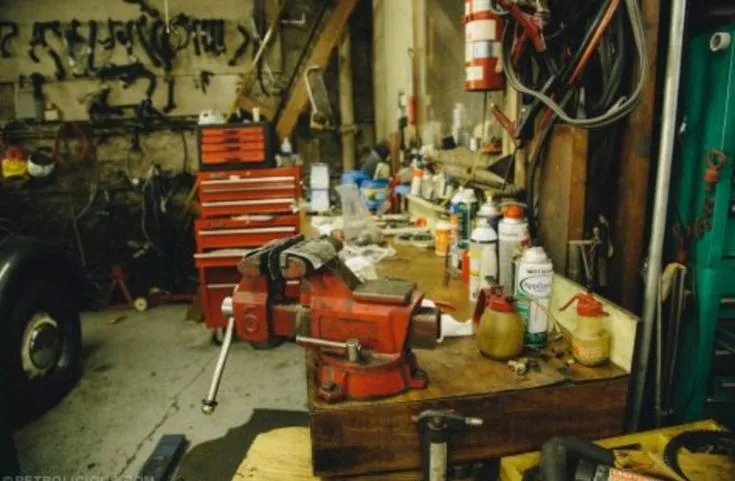
Photo: vintage greasy repair manual binder on workbench garage, via i.pinimg.com
My grandfather kept a three-ring binder in his garage in rural Ohio — a fat, oil-blotted thing held together with packing tape, full of handwritten notes on fixing small engines, well pumps, and a 1968 John Deere that refused to die. When he passed, the binder came to me, along with a stack of factory repair manuals from the early '70s that smell like a machine shop.
Here's the thing that gnawed at me: that binder is the best documentation I've ever used, and I write documentation for a living. So I did what any reasonable tech blogger does with an inheritance. I spent three weekends rebuilding it as a local-only wiki, and I used the project as an excuse to kick the tires on the whole "local-first" software movement that keeps showing up in my feeds.
The Rules of the Experiment
The constraints were simple. Everything had to live on my machine — no cloud sync, no accounts, no subscription nags. It had to handle photos of diagrams alongside text. And critically, it had to be something my dad, a man who prints out emails, could conceivably open if I got hit by a bus. Handing down knowledge was the whole point. A knowledge base my survivors can't open is just a diary.
Contestant One: Obsidian
Obsidian is the darling of the personal knowledge management crowd, and after this project I get why. It's just a folder of Markdown files with a very good interface bolted on top. I scanned the manual pages at 600 DPI, dropped the PDFs into an attachments folder, and transcribed Grandpa's notes beside them, linking pages like "Carburetor, Tecumseh" to "Winter Starting Tricks."
The backlinks feature turned out to be the sleeper hit. His notes were never organized — they were associative. "Same trick as the tiller, see page with the blue ink smudge." Wiki-links replicate that brain without the smudge.
The catch: out of the box, Obsidian is a viewing experience. Hand the raw folder to a non-technical person and they'll see a wall of files. It's portable in theory, intimidating in practice.
Contestant Two: Logseq
Logseq takes the same Markdown-on-your-disk philosophy but organizes everything as daily journal entries with bullet-point outliners. For transcribing a binder, that's a mismatch. Repair manuals are reference material, not journals. I found myself fighting the tool to make sections behave like sections.
Where Logseq shone was tagging. Slapping #fuel-system on twenty scattered notes and having them aggregate instantly is genuinely useful when your source material is as chaotic as a mechanic's marginalia. But the outliner model made longer procedural write-ups feel like I was nesting bullets to China. I archived the Logseq vault after week two.
Contestant Three: Plain Markdown and a Text Editor
The control condition: a folder of .md files, images in a subfolder, opened in whatever editor is handy. No app, no lock-in, no learning curve for my dad beyond "double-click the file." Rendered in a Markdown viewer or printed straight to paper, it's readable by anyone with a pulse.
Honestly? For a hand-me-down knowledge base, this was the strongest contender. It's boring in the way a hammer is boring. It will still open in 2065.
What the Binder Knew All Along
Working through page after page of my grandfather's handwriting, I noticed what the analog version had that my shiny wiki doesn't:
- Wear is signal. The pages he consulted most were the most destroyed. My wiki shows no such heat map.
- Context traveled with the note. A note taped next to the relevant diagram needs no search function.
- It required zero trust. No update, no login, no company deciding to change its pricing model.
That last one is the actual local-first pitch, and to the movement's credit, Obsidian and Logseq mostly deliver. Your files are yours, in open formats, on your disk. That's rarer than it should be in 2025, and it's worth defending.
But the hype oversells one thing: local-first software doesn't automatically make documentation durable. Durability comes from boring formats, printed backups, and writing for a reader who can't call you for help. Grandpa understood that. Every note in that binder explains itself, because he knew the only person maintaining the wiki was future him.
The Verdict
I settled on Obsidian as the working copy and plain Markdown as the archive, with the whole vault zipped to a USB drive in the same drawer the binder used to live in. Total cost: a used flatbed scanner and about twenty hours.
Was it worth it over just... keeping the binder? For searchability and backup, absolutely. For soul, no — which is why the binder stays on the shelf next to the drive. The best documentation system, it turns out, is a hybrid with a very low-tech fallback. Notion could never.