Nobody Reads the Router EULA. I Read Eleven of Them. Here's What's Buried in There.
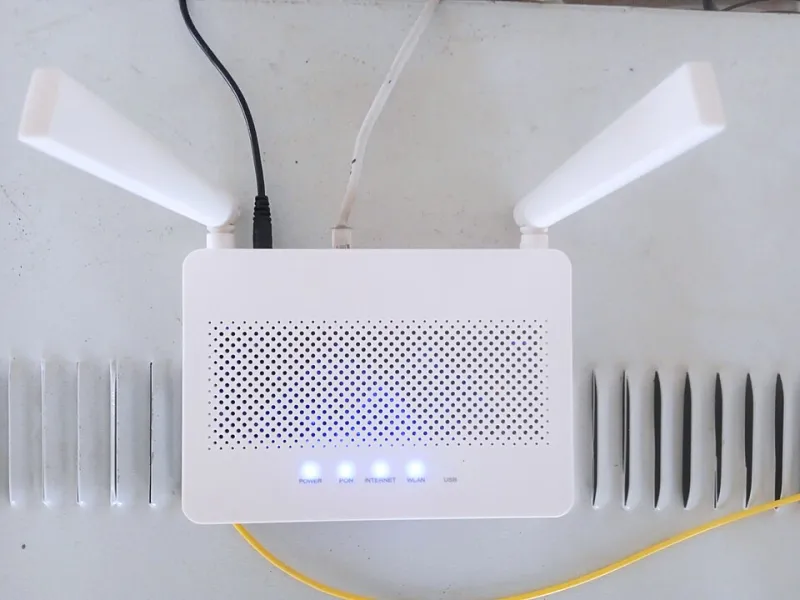
Photo: Solijon Solayev, CC BY-SA 4.0, via Wikimedia Commons
Somewhere in a drawer in your house, there's a little black box that handles every single byte of internet traffic for everyone under your roof. You probably haven't logged into it since the day your ISP technician set it up. And when you unboxed it — or when that technician did — somebody clicked a button that said something like "I have read and understood the End User License Agreement."
Nobody read it. That's the joke, right? It's the punchline of a thousand memes. But I got curious about what's actually in those agreements, so I did the thing nobody does: I read eleven of them. TP-Link, Netgear, ASUS, Eero, a Comcast gateway, a Spectrum modem's bundled software, and a few others I had lying around or dug up online. Two highlighters died in the process.
Here's what I found.
The Clause That Isn't Really About You
Most router EULAs follow a predictable skeleton: don't reverse engineer the firmware, don't use it for anything illegal, warranty disclaimers, the works. Yawn. But buried in several of them — and this is the part that made me sit up — is language about automatic firmware updates and remote management.
One major manufacturer's agreement grants itself the right to collect "device information, usage data, and performance metrics" and to push updates to your hardware without additional consent. Translation: the box on your shelf can be modified after purchase, indefinitely, and it's phoning home about how you use it. Another agreement reserves the right to disable features if you don't accept updated terms. Your hardware, slowly rented back to you.
Now, to be fair: automatic security updates are genuinely good. Unpatched consumer routers are a botnet recruitment dream — the Mirai attack of 2016 hobbled huge chunks of the internet using exactly these devices. But there's a difference between "security patches" and "we can change what your device does and collect telemetry while doing it," and the EULAs tend to blur that line on purpose.
The Arbitration Trap
Here's the section my lawyer friend (yes, I bought him lunch first) flagged as the most consequential: mandatory binding arbitration with class action waivers.
The pattern is almost always the same. Somewhere around page six, in font size that suggests the drafter was being charged per character, you'll find language stating that any dispute will be resolved through binding arbitration, and that you waive your right to participate in a class action lawsuit.
Why does this matter for a router specifically? Because routers have had real, documented vulnerabilities — CVEs that let attackers take full control of the device. If a manufacturer shipped firmware it knew was vulnerable and you got harmed, your practical legal recourse under many of these agreements is... an individual arbitration case against a multinational corporation. Good luck.
The good news: several of these companies offer a 30-day opt-out window for the arbitration clause, usually via a letter to a legal department address listed in the agreement. Almost nobody does this. It takes ten minutes and a stamp.
What Your ISP Agrees To (And What It Agrees You Won't Do)
The rental agreements for ISP-supplied gateways are a different flavor of weird. One major US carrier's terms prohibit you from "modifying, reverse engineering, or attempting to derive the source code" of the gateway's software — which, fun fact, runs Linux, a license that technically requires source availability. The tension between the GPL and locked-down ISP firmware is a decade-old fight that still hasn't fully resolved.
There's also the fun one: several agreements state that the equipment remains ISP property and that unauthorized modifications — including, in some readings, putting it into bridge mode or flashing custom firmware — can constitute a terms violation. People have genuinely had service disputes over this.
What You Can Actually Push Back On
So is it all hopeless? Not quite. A few practical takeaways:
- You can often decline telemetry. Most consumer routers have a data-sharing toggle buried in the admin panel or companion app settings. Turn it off. It won't break anything.
- The arbitration opt-out window is real. Check your agreement for the mailing address and deadline. It's the single highest-leverage ten minutes in this whole exercise.
- Buy your own hardware. Owning an unlocked router means you're dealing with a manufacturer's EULA, not a landlord-tenant relationship with your ISP. You can also run open-source firmware like OpenWrt on supported devices, which sidesteps a lot of this entirely.
- You cannot negotiate the EULA itself. Nobody's clicking 'I Agree' has ever resulted in a redline. But you can choose products based on whose fine print is least offensive, and that's a form of voting.
The Part That Worried Me Most
Honestly? It wasn't the arbitration clauses or the telemetry. It was how normal all of this has become. We've accepted that the devices we buy come with post-purchase terms that can change, features that can be revoked, and data collection that's on by default. The router EULA is just where that trend got started earliest, because the router was the first computer in your home that nobody thought of as a computer.
Read your own agreement. At minimum, log into the thing. It's been quietly agreeing to things on your behalf for years — the least you can do is know what those things are.